We, as of right now, feel completely protected and safe from AI and quantum threats — but right as we speak, someone is becoming endangered because of the threat quantum computers carry. Important assets and information are being silently harvested today, to be used against us tomorrow.
Whether it's online banking, digital payments, healthcare records, or government communications, sensitive information is protected using cryptographic systems such as RSA (Rivest-Shamir-Adleman) and ECC (Elliptic Curve Cryptography). These systems have remained secure because classical computers cannot efficiently solve the mathematical problems underpinning them — but when quantum computers come into action, the whole dynamic changes entirely.
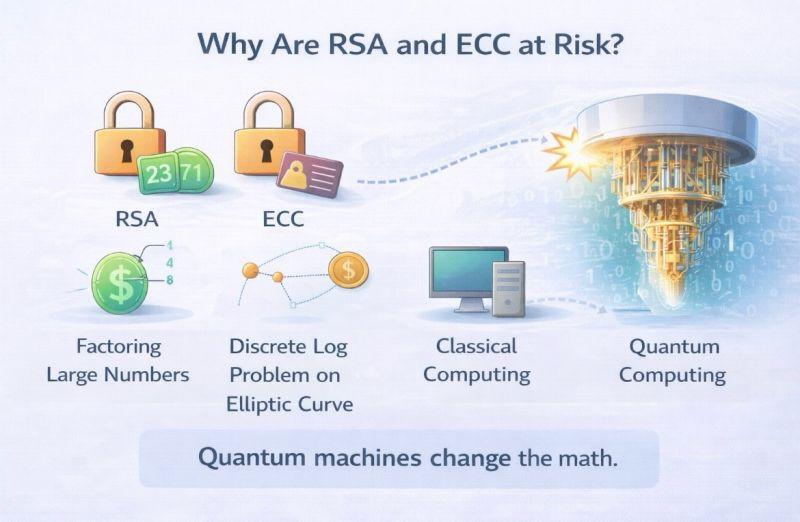
This is where Post-Quantum Cryptography (PQC) comes into action. AI exposes vulnerabilities — these threats are expensive to deal with, but the information is ultimately recoverable. Quantum threats, on the other hand, can lead to extinction-level events for an organisation that has failed to migrate. The damage is already beginning. "Harvest Now, Decrypt Later" is the most talked-about threat vector in quantum security today.
Why Does the Market Need PQC?
Earlier, companies could react to threats as they appeared and switch systems in response. Quantum computing changes this completely. If we wait until quantum computers become a direct threat, it will be too late — adversaries will already hold years of harvested encrypted data ready to be cracked.
Protecting Data for the Long Term
Many industries — healthcare, finance, and defence — need data secured and encrypted in a way that only authorised personnel can access, not just today but for decades to come. Healthcare records, legal contracts, government communications, and trade secrets can remain sensitive for 10, 20, or even 30 years. If that data is encrypted with RSA or ECC today and captured by an adversary, it could be fully readable within the decade.
The Scale of the Problem Is Growing
The rapid growth of cloud computing, connected devices, and IoT infrastructure has created an enormous attack surface. The more encrypted data in circulation, the greater the harvest opportunity for adversaries. This is not a future problem — it is compounding daily.
The Solution
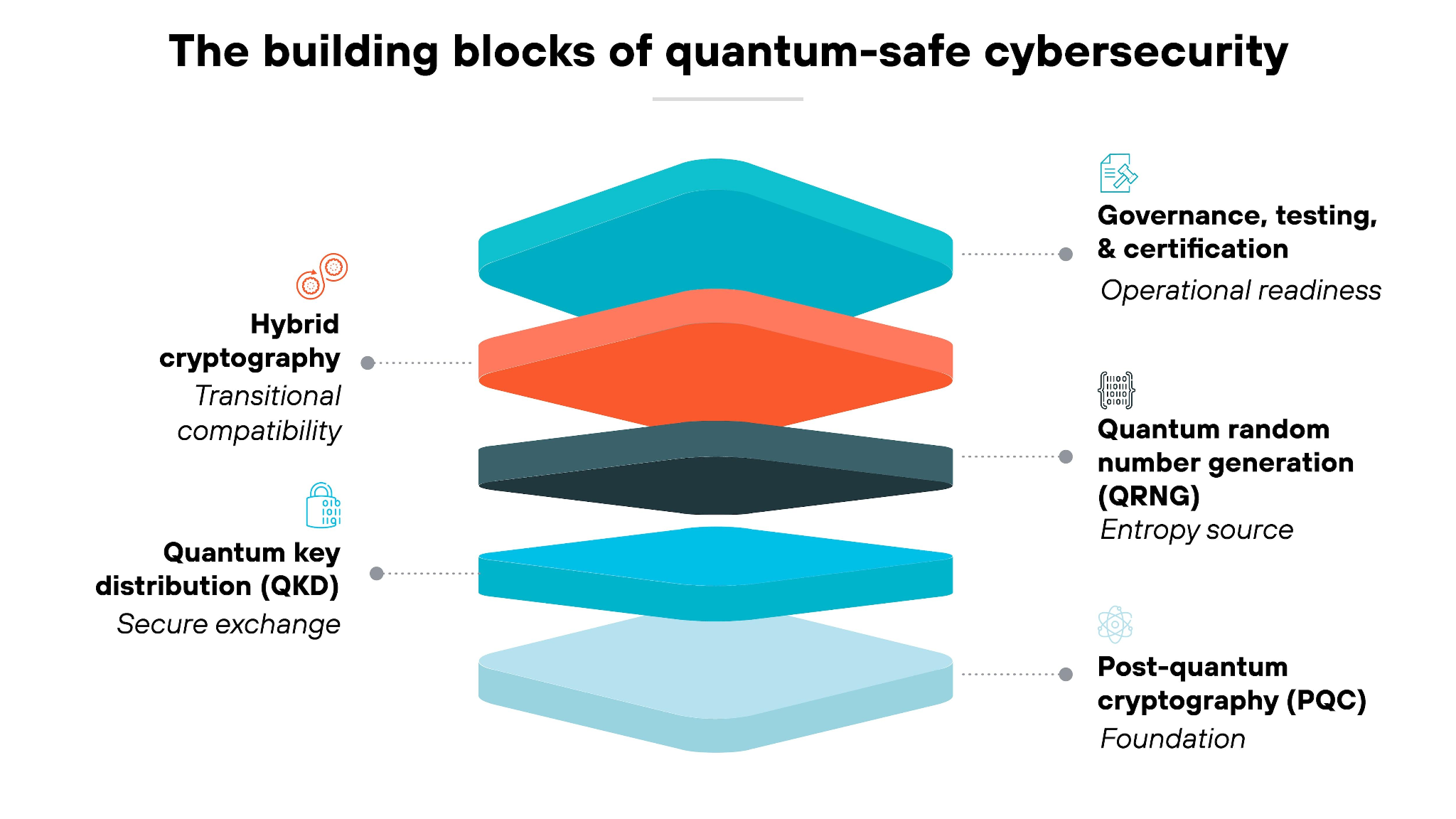
Introducing PQC into infrastructure as soon as possible is the only answer. These algorithms use mathematical foundations far more complex than those underpinning RSA and ECC — believed to be resistant to both classical and quantum attacks. Critically, unlike some quantum-security approaches that require entirely new hardware, PQC can often be introduced through software-based upgrades, making adoption far more practical.
The Quantum Problem Is Inescapable
For years, quantum computing existed mostly in research labs and conference panels. But one outcome of quantum progress is inescapable: the security systems that guard today's digital world were never built for the quantum age. Every day, organisations rely on RSA and ECC to protect financial transactions, customer data, intellectual property, and critical communications. These technologies have been the roots of digital trust for decades. When quantum computers are scaled up enough, they will break many of these systems far more efficiently than classical computers ever could.
"The question is not only what will happen when the powerful quantum computer finally arrives. Yesterday was the day we should have begun to prepare."
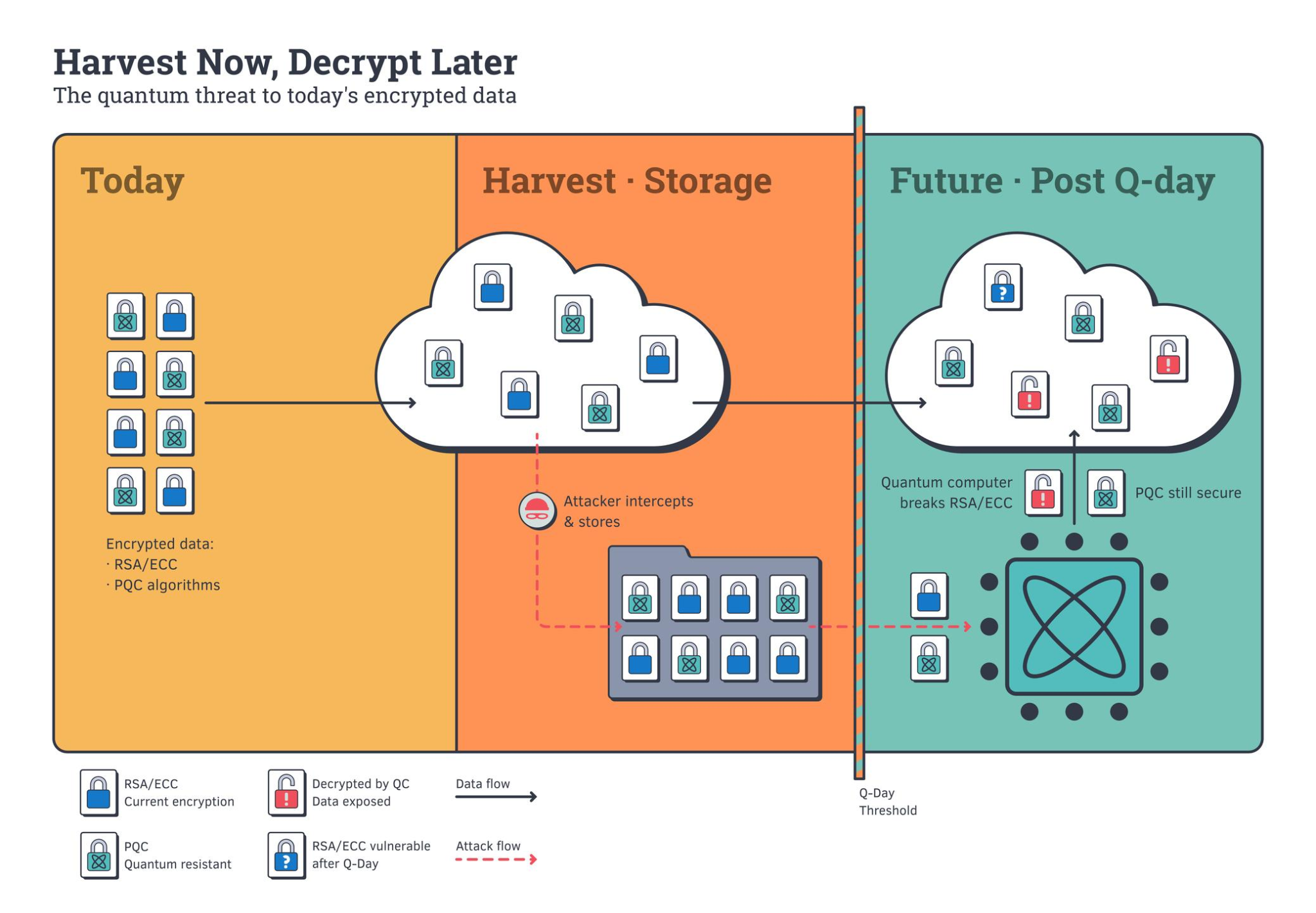
"Harvest Now, Decrypt Later" — The Threat Already in Motion
The idea is surprisingly simple. Today, even if an attacker cannot read encrypted data, they gather and store it. That same data, years down the road, could be fully decrypted once quantum capabilities become available. This is not theoretical — state-level adversaries are already running these operations at scale.
Why Existing Security Measures Fall Short
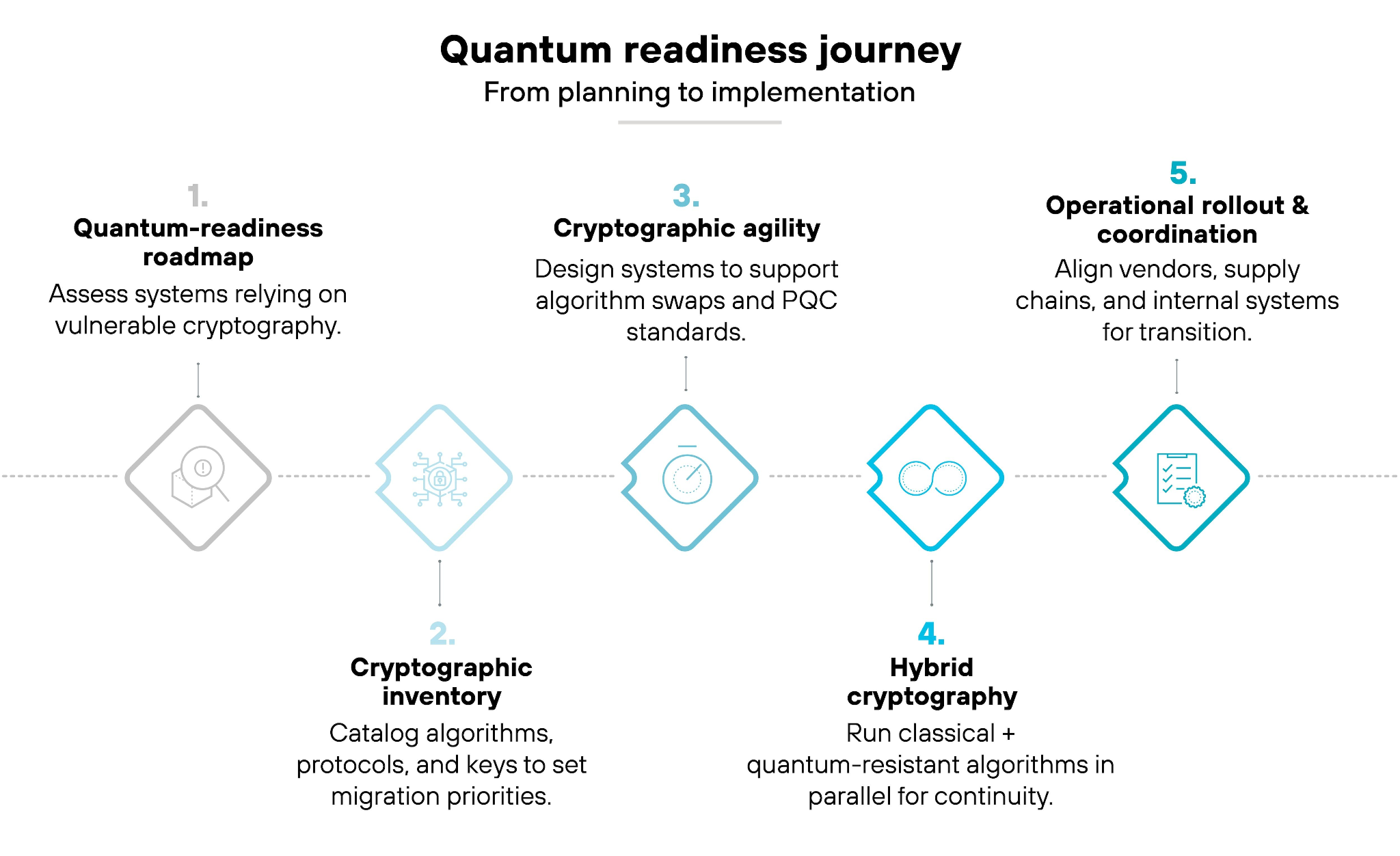
Many organisations do not have a complete picture of where cryptographic systems are used in their own infrastructure. If you can't see it, you can't upgrade it. This visibility gap is one of the largest obstacles to quantum readiness. A 2023 survey by the IBM Institute for Business Value found that fewer than a quarter of organisations had completed a full cryptographic inventory. Before companies can migrate, they must first understand where vulnerable cryptography exists and how deeply it is rooted across their operations.
The Migration Challenge
The move to post-quantum cryptography is shaping up to be one of the largest infrastructure upgrades the cybersecurity industry has ever undertaken. Software updates can be pushed out overnight — cryptographic migrations take years of planning, testing, and staged rollout. Many large organisations have thousands of applications relying on old encryption standards, some put in place over a decade ago and still underpinning critical operations. Many post-quantum algorithms also require larger key sizes, which can create friction in resource-constrained environments like IoT devices.
This leads to a migration challenge that extends far beyond mathematics. It is an operational and strategic challenge — one that requires building crypto-agile architectures that allow algorithms to be swapped with minimal disruption, rather than rebuilding systems from scratch.
Where the Tables Can Be Turned: The Market Opportunity
The demand for cryptographic risk assessment tools is accelerating. Organisations need solutions that help them identify vulnerabilities, evaluate quantum readiness, implement quantum-safe encryption, and track compliance with emerging standards. McKinsey estimates the quantum technology market could reach $106 billion by 2040, with cybersecurity forming a significant share.
High-potential areas include: cryptographic risk assessment tools, migration consulting services for enterprises and government bodies (including India's Ministry of Defence, which has publicly committed to quantum-safe infrastructure), crypto-agile architecture design, and PQC solutions for constrained devices. This transition mirrors the early days of cloud adoption — the real value is in enabling organisations to adopt the technology effectively.
Looking Further: First Movers Win
NIST finalised its first post-quantum cryptographic standards in August 2024. The NSA has issued migration guidance. The EU's ENISA has published its quantum threat landscape report. Regulatory pressure will only intensify. Organisations that begin their cryptographic inventory and migration planning today will be better positioned when compliance deadlines arrive — and when a quantum computer powerful enough to break RSA eventually becomes operational.
For India specifically, building a Quantum Safe Ecosystem now means protecting not only defence and government communications, but also the financial infrastructure, health data, and digital public goods that underpin the country's digital economy. Today's startups developing quantum-safe solutions could be tomorrow's foundational cybersecurity vendors. The window for first-mover advantage is open now.
"Post-Quantum Cryptography is not just a technical change — it is the foundation of trust in the post-quantum future. The race is already on."
QNNX Research Team
Expert in post-quantum cryptography and secure communications infrastructure at QNNX.